
They Sold Themselves Into Slavery

lamb-slainUnitas Fratrum (Unity of the Brethren) is the formal name of the group often referred to as the Moravian Brethren or Moravian Church. They were one of the very first Protestant groups in the world, originating from Jan Hus and the Bohemian Reformation of the 15th century in what is now the Czech Republic.

Fleeing religious persecution, they fled to Saxony in 1722, and some of them were given permission to settle on the land of a nobleman named Count Nikolaus von Zinzendorf, a Lutheran Pietist who had a large estate outside of Berthelsdorf.

The Moravian Protestants who settled there, together with Zinzendorf, established a church and named their settlement Herrnhut (The Lord’s Watch). One characteristic of their new community was continuous prayer, done in shifts by different people. This continuous prayer at Herrnhut went on uninterrupted for 100 years.

What is particularly significant about the Moravian church at Herrnhut is that they were a missionary church. They were the first large-scale Protestant missionary group, and they were the pioneers of the modern missionary movement.

During the eighteenth century alone, the Moravians established mission outposts in the Virgin Islands (1732), Greenland (1733), North America (1734), Lapland and South America (1735), South Africa (1736), and Labrador (1771).

Their all-consuming purpose was to spread the gospel to the ends of the earth, a passion that was evident in their proportion of missionaries to laypeople, by some estimates a ratio of 1:60.

Some of the very first Moravian missionaries went to the Caribbean island of St Thomas. They went there in order to minister to the slaves on the island, even selling themselves as slaves in order to get access.

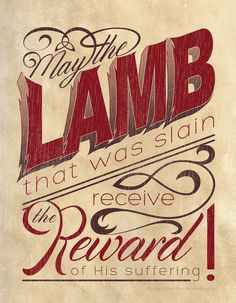
The Moravians had learned that the secret of loving the souls of men was found in loving the Savior of men. On October 8, 1732, a Dutch ship left the Copenhagen harbor bound for the Danish West Indies. On board were the two first Moravian missionaries; John Leonard Dober, a potter, and David Nitschman, a carpenter. Both were skilled speakers and ready to sell themselves into slavery to reach the slaves of the West Indies. As the ship slipped away, they lifted up a cry that would one day become the rallying call for all Moravian missionaries, “May the Lamb that was slain receive the reward of His suffering.” The Moravian’s passion for souls was surpassed only by their passion for the Lamb of God, Jesus Christ. (Source)

I don’t know about you, but it challenges me to see that these people were willing to sell themselves into slavery in order to minister to people they had never met before. That is radical love and radical self-sacrifice. It expresses true belief in the importance and urgency of people coming to know the good news of who Jesus is and what He has done.

This attitude is absolutely counter-cultural, not only in our day, with our extreme focus on self, but also in every generation, since humans are naturally inclined to self-centeredness. This radically different approach to life and others comes from having a Savior and a God who gave up everything to save enemies and rebels, out of love for us.

For while we were still weak, at the right time Christ died for the ungodly. For one will scarcely die for a righteous person—though perhaps for a good person one would dare even to die— but God shows his love for us in that while we were still sinners, Christ died for us.
For if while we were enemies we were reconciled to God by the death of his Son, much more, now that we are reconciled, shall we be saved by his life. (Romans 5:6-8,10)

To read more about the Moravians and their hearts for prayer and missions, you can check out the entire article this excerpt comes from.

I also recommend this book for those interested in the history of Christian missions: From Jerusalem to Irian Jaya: A Biographical History of Christian Missions.

Aren’t Justice and Mercy Incompatible by Definition?

web-justice-mercy-lisa-aiken-shutterstock_197111327

Recently at White Fields we have been studying through the Book of Jonah. Jonah was called by God to go to Nineveh, the capital of Assyria – a violent and imperialistic nation which posed a clear and present danger to the very existence of Israel. And Jonah was called to take them a message which carried with it the promise of mercy if they would repent of their sins and turn to the Lord.

Archaeologists and historians who have studied the Assyrian Empire report things such as human sacrifice, furniture upholstered with human skin, pyramids of human skulls, how they would put hooks in the faces of captives and leading them around by chains…

So it is not surprising that one of Jonah’s hesitations with going to Nineveh was that he didn’t think it would be fair for God to show mercy to people who did such terrible things. Jonah struggled with the question of how God could still be just if he were to forgive these sins and show them mercy.

This is a question many people struggle with:  If you forgive someone, then what about justice?  Can anyone just do anything they want and then say sorry, and suddenly it’s okay, and there are no repercussions? Where’s the justice in that?

For this reason, some people are hesitant to forgive those who have hurt them: because it kind of feels like in that case, they are getting away with it, or you are saying that it wasn’t a big deal — even though it was. (More on this topic here: Does Forgiving Mean Forgetting?)

One of the great promises of the Bible is that God is just, and even if we don’t see it in our lifetime, there will be justice.  Nothing is hidden from the eyes of God, and He will deal justly with every hurtful action and every wrongdoing. This gives us great comfort in the face of injustice, corruption and unfair and unethical behavior that we see or which touches our lives.

In the Psalms, the Psalmist often bemoans the injustice that he sees in the world: that those who lie, cheat and steal get ahead, at the expense of those who are fair and honest. Nice guys finish last. Good doesn’t always defeat evil. However, the Psalmist then goes on to comfort himself with the knowledge that, in the end, God will bring about justice: there is no wrong deed that will not go unpunished.

There’s only one problem with that:    ALL of us have done wrong things. Without exception…

So the problem with justice is: if God is totally just and judges every wrong deed, then that means that He will have to not only judge those who have sinned against us, but He will have to judge us as well.

But then, the Bible gives us the good news: for those who turn to the Lord, He will give them mercy!

But here’s the thing:   The definition of Justice is:  Giving someone what they deserve. On the other hand, the definition of Mercy is:  NOT giving someone what they deserve.

So, by definition: if you show someone mercy, then you are no longer being just! The two are diametrically opposed. So, if God shows mercy, doesn’t that mean He is no longer being just? Does one of God’s attributes therefore contradict another one of His attributes?

Isn’t mercy therefore a travesty of justice?

One of the great tensions of the Old Testament is the question of how God can be both Just and Merciful at the same time.

In my last post I wrote about another one of these great tensions: the question of whether the covenant with God is conditional or unconditional.

Neither of these tensions are actually resolved in the Old Testament. They only find their resolution in the New Testament – in Jesus.

The way that God can be both just and merciful at the same time, is because Jesus took all of the righteous judgment that we deserved, so that God could show us mercy. In this way, God remains completely just, and yet is able to show mercy without compromising his justice. In this way, He is both just and the justifier of the one who trusts in Jesus by faith. (Romans 3:26)

In Jesus, the Judge of all the Earth came to the Earth and took our judgment HIMSELF, so that we could be saved. It was the ultimate act of grace. 

Whereas justice is giving someone what they deserve, and mercy is not giving someone what they deserve, grace is giving someone something they don’t deserve.

Jesus is the answer to all the riddles.

Is God’s Love Conditional or Unconditional?

As a young Christian, I remember hearing that God’s love is unconditional. And yet, I also heard that it was necessary to believe in Jesus and embrace the gospel in order to become a child of God and receive salvation. Is that a “condition”? Is God’s love really unconditional?

I saw an interesting conversation online yesterday. It was a discussion over what was being taught at a certain church in regard to salvation, the love of God and the work of Jesus on the cross.

Recently William Paul Young, the author of The Shack, released his first non-fiction book: Lies We Believe About God, in which he lays out what he believes. I happened to see this book on the shelf at Walmart recently, alongside a bunch of other books in the religion/spirituality realm which I hope that no-one will ever read because of their aberrant/heterodox theology and claims about God.

Here’s a word of advice: As a rule, don’t buy books about God / Spirituality / Theology from Walmart.

Basically, in Lies We Believe About God, William Paul Young comes out as a full-fledged universalist; he believes that all people will be saved, that God doesn’t require anything of us, that the idea of Hell is a creation of Medieval Christendom for the purpose of manipulating people into submission, and that no matter someone does or believes, they are a child of God and will therefore be saved and have eternal life.

Of course, these beliefs fly in the face of what the Bible clearly teaches and what Christians have taught and believed for 2000 years. For an explanation of the content of this book and a response to it, check out this great article from the Gospel Coalition.

How this ties into the online discussion that I witnessed yesterday, was that this church which had embraced the views of Wm. Paul Young and had taken a hard turn towards universalist theology. As a result, some people had left the church while others had embraced this teaching.

The crux of both this online conversation and the beliefs of William Paul Young is the question of whether the love of God is conditional or unconditional. The one thing that was assumed as true by all, is that God’s love is unconditional, which then created some issues, questions and difficulties for those on both sides…

Some made the conclusion that if God’s love is unconditional, then even the requirement that one must believe in Jesus constitutes a condition! Therefore, they conclude: ‘believing in Jesus must not be necessary for salvation.’ Furthermore, they conclude: ‘God does not require anything of us in order to accept us as his children, since he loves us unconditionally, and therefore all people are children of God simply by virtue of having been created, and therefore all of the promises of the Bible which pertain to the “children of God” belong to all people universally, no matter what they do or believe.’

Others, who hold orthodox Christian beliefs, disagreed with this, pointing out that Jesus himself clearly taught that unless one believes in Him they will not have salvation (John 3:18), and that the status of “Child of God” is reserved for those who believe (John 1:12). They struggled, however, to explain how these things did not constitute “conditions” – which would then contradict the claim that God’s love is “unconditional.”

So what is the answer? Is God’s love conditional or unconditional?

First of all, I do believe that God loves all people, but the question of whether all people have salvation or are in a covenant relationship with God is another issue.

This question of whether the covenant with God is conditional or unconditional is one of the great tensions of the Old Testament. In some places, it seems to be saying that God will love and bless and be faithful to his people unconditionally, no matter what they do. Yet, in other places it seems to be saying that the covenant is conditional, that certain requirements must be met in order for it to apply.

This tension builds and builds throughout the Old Testament, but is never actually resolved… UNTIL we get to Jesus!

In Jesus, the question is answered and the tension is resolved. The message of the gospel is that Jesus met all of the conditions of the covenant so that IN HIM (and only in Him) God can love us and accept us unconditionally.

The message of the gospel is that Jesus met all of the conditions of the covenant so that IN HIM (and only in Him) God can love us and accept us unconditionally.

Jesus is the answer to all the riddles.

Is God’s love conditional or unconditional? The answer is: Yes.
The good news of the gospel is that Jesus met all the righteous requirements of the Law, he fulfilled all of the conditions of the covenant, once and for all, on our behalf, so that if we are “in Him” by faith, then we are declared righteous, we are justified, and we have become children of God. Apart from Jesus, there is no such promise or hope. This is why the gospel is truly good news!

Much aberrant theology comes from deficient Christology.

May we be those who make much of Jesus and who celebrate the gospel: “the mystery hidden for ages and generations but now revealed to His saints.” (Colossians 1:26)