Why Epistemology Matters More than Ever – with Miles DeBenedictis

In this episode of the Theology for the People Podcast, I am joined by Pastor Miles DiBenedictus of ⁠Cross Connection Church⁠ in Escondido, California.

Miles is a PhD student at Southern Seminary studying AI ethics, and in this discussion, they explore the topic of epistemology: what it is, why it matters, and how it affects everything from how we read the Bible to how we navigate truth in a world of misinformation and digital confusion. 

Whether you’re new to the term or already intrigued by philosophy, this conversation will help you think more clearly about how we know what we know—and why that matters for following Jesus today.

Click here to listen to the episode, or listen in the embedded player below.

Why Epistemology Matters More Than Ever – with Miles DeBenedictis Theology for the People

In this episode, Pastor Nick Cady interviews Pastor Miles DiBenedictus of Cross Connection Church in Escondido, California.Miles is a PhD student at Southern Seminary studying AI ethics, and in this discussion, they explore the topic of epistemology: what it is, why it matters, and how it affects everything from how we read the Bible to how we navigate truth in a world of misinformation and digital confusion. Whether you're new to the term or already intrigued by philosophy, this conversation will help you think more clearly about how we know what we know—and why that matters for following Jesus today.Follow Miles on YouTube: https://www.youtube.com/@pastormilesVisit Miles' website: https://pastormiles.com/

I have also started posting more on the Theology for the People YouTube channel. You can watch this interview on video here:

Christian Truth is in the Service of Christian Love

In the introduction to his book First Theology: God, Scripture and Hermeneutics, Kevin Vanhoozer writes this, which is worthy of a devotional thought for today:

Christian truth is in the service of Christian love. If I speak in the tongues of Reformers and of professional theologians, and I have not personal faith in Christ, my theology is nothing but the noisy beating of a snare drum. And if I have analytic powers and the gift of creating coherent conceptual systems of theology, so as to remove liberal objections, and have not personal hope in God, I am nothing. And if I give myself to resolving the debate between supra and infralapsarianism, and to defending inerrancy, and to learning the Westminster Catechism, yea, even the larger one, so as to recite it by heart backwards and forwards, and have not love, I have gained nothing.

This one thing I know: there is no more vital task facing Christians today than responding faithfully to Scripture as God’s authoritative speech acts — not because the book is holy but because the Lord is, and because the Bible is his Word, the chief means we have of coming to know Jesus Christ.

Those who interpret the Bible rightly — those who look and live along the text, following the written words to the living Word — will have rightly ordered loves and rightly ordered lives. The apostle Paul leaves us in no doubt as to either his first theology or his first love: “I count everything as loss because of the surpassing worth of knowing Christ Jesus my Lord” (Philippians 3:8).

Kevin Vanhoozer, First Theology: God, Scripture, & Hermeneutics (IVP Academic, 2002), 40-41

Take Joy in Being the People of God

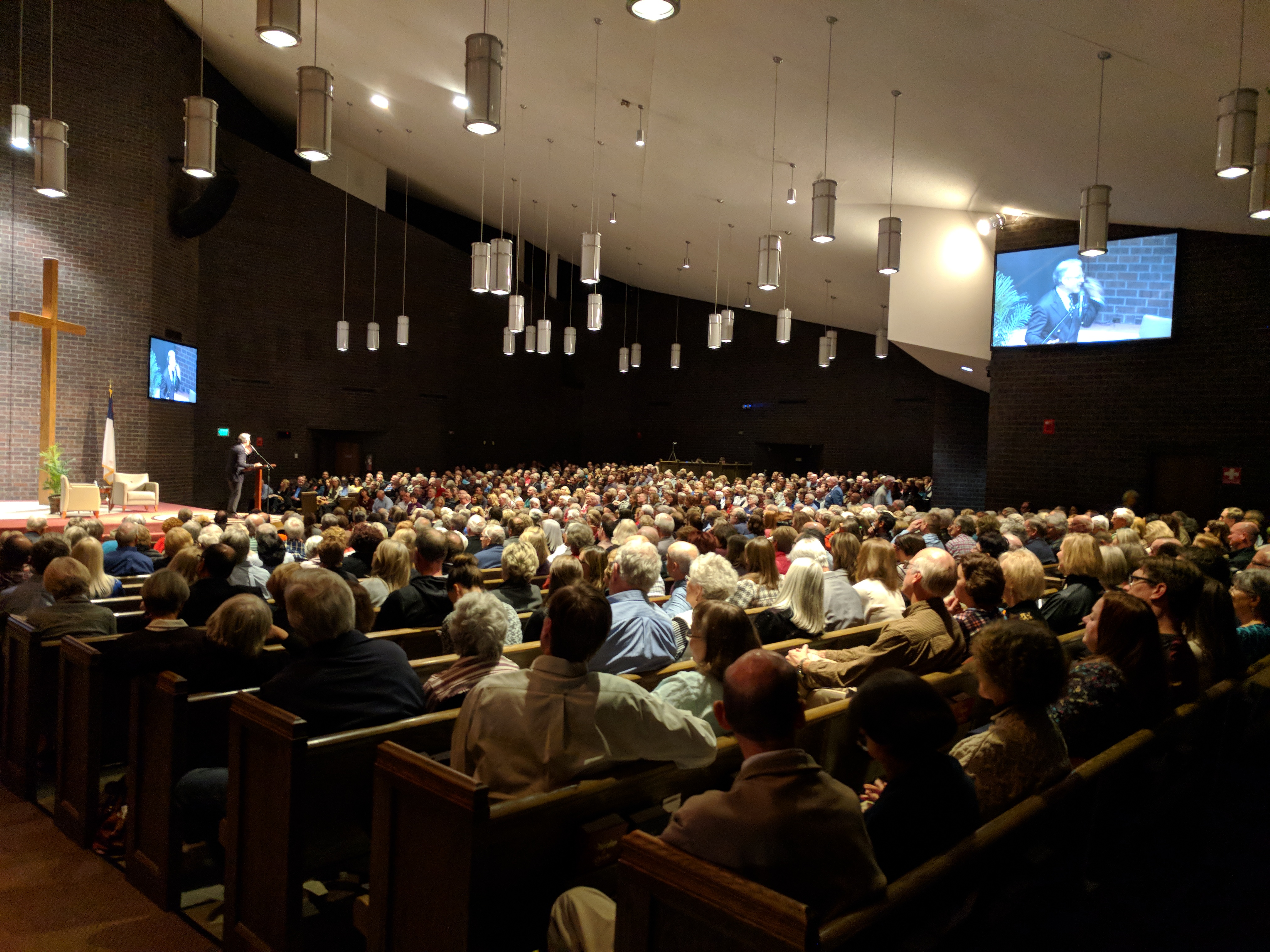
Last night I went to an event where author Eric Metaxas was speaking about his new book, a biography of Martin Luther. It was held at a church in Greenwood Village, and after speaking for about an hour about Luther and the writing of the book, he answered questions and then signed books.
IMG_20171024_194254.jpg

During the Q&A time, Metaxas said a few things which I thought were particularly powerful. The question was one about how Christians should always be reforming the church. Eric responded by saying that: yes, the Reformation must always continue, but in his opinion, oftentimes the church is too critical of the church. That Christians spend a lot of time deriding Christians and bemoaning the church, when in fact we should find an immense amount of joy in being the people of God who are called to take the message of God’s grace and love into the world. This is something we should revel in!

He went on to say that he grew up in the secular culture, and that for him – he saw the church as a living connection to God. When you’re drowning and someone throws you a rope, he said, it may be an imperfect rope, but it is a rope nonetheless, and rather than focusing on its flaws, you are thankful for the rope!

Metaxas went on to point out that the cultural elites in our day all speak the same language of secular humanism, and they together have collectively agreed that Christianity is old fashioned, obsolete and passé – and too often, we as Christians bow down to that and say: ‘Yeah, you’re right,’ and we shrink back into the shadows or retreat into an insular Christian sub-culture. Instead, we should stand in confidence as the people of God, with the truth of God, and use all avenues available to us to bring God’s truth and the message of the gospel into our society.

Eric has done this very well with his radio program and his books, which are published by a mainstream publisher (Viking Books) and several of which have made the New York Times bestseller list. He has a unique perspective on the church, having become a Christian later in life, studying at Yale and living in New York City, none of which are generally considered particularly friendly towards Christianity. He has been a good steward of the gifts that God has given him and has become an important and influential voice in our society, heralding the gospel as he can.