
What Palm Sunday Teaches Us About True Worship

This article was originally published on CalvaryChapel.com

As Jesus rode into Jerusalem on a donkey, the crowds erupted in praise. They laid their cloaks on the road, waved palm branches, and shouted, “Hosanna to the Son of David! Blessed is he who comes in the name of the Lord!” (Matthew 21:9).

And yet, Luke’s Gospel tells us that while the crowds cheered, Jesus wept (Luke 19:41). He knew that the fanfare was not going to last, and that many of the people were going to reject the salvation He had come to bring.

The people of Jerusalem wanted a Messiah who could free them from Roman rule. Jesus had come to do something much bigger, and even better, than the best thing they could imagine in that moment. He had come to bring salvation for their souls and establish an everlasting kingdom.

One of the most important lessons we can learn from the events of Palm Sunday is what it means to truly worship Jesus.

1. True Worship Involves Honoring Jesus as King

Jesus’ entry into Jerusalem on a donkey was a deliberate declaration: By fulfilling the prophecy in Zechariah 9:9, Jesus was announcing that He was the long-awaited “Son of David,” the one who would restore the throne of David, which God had promised would be an everlasting house.

And yet, Jesus was also declaring that He was a different kind of king than what many people might have anticipated. Conquering kings ride warhorses. Jesus rode on the foal of a donkey—not even a full-grown donkey! He was coming not to make war against the Romans but to sacrifice His life.

As the people shouted “Hosanna” (“Save now!”), they acknowledged Jesus as their king, even if many of them underestimated the breadth of the nature of the salvation He had come to bring. And yet, they were right to acknowledge Him as their king! The essence of worship is surrender to Jesus as your king: to give Him the place of ultimate authority over every area of your life. True worship means surrendering our plans and expectations into His hands and entrusting ourselves wholly over to Him.

This Palm Sunday, it is worth asking yourself the following: Have I made Jesus my king?

My pastor, Tom Stipe, used to say, “I just want to be a penny in God’s pocket that He can spend wherever and however it pleases Him best.” The essence of worship is surrender, and like Isaiah, who saw a glimpse of God’s glory, when we really understand who God is—both His majesty and His grace—it causes us to respond to His call and surrender our lives to His will. To make Jesus your king means letting Him sit on the throne over you, and following His lead in every area of life.

2. True Worship Involves Receiving His Salvation

When Jesus entered Jerusalem, the city was stirred (Matthew 21:10). The Greek word used here is seismos—the same word used for earthquakes. His arrival shook the city.

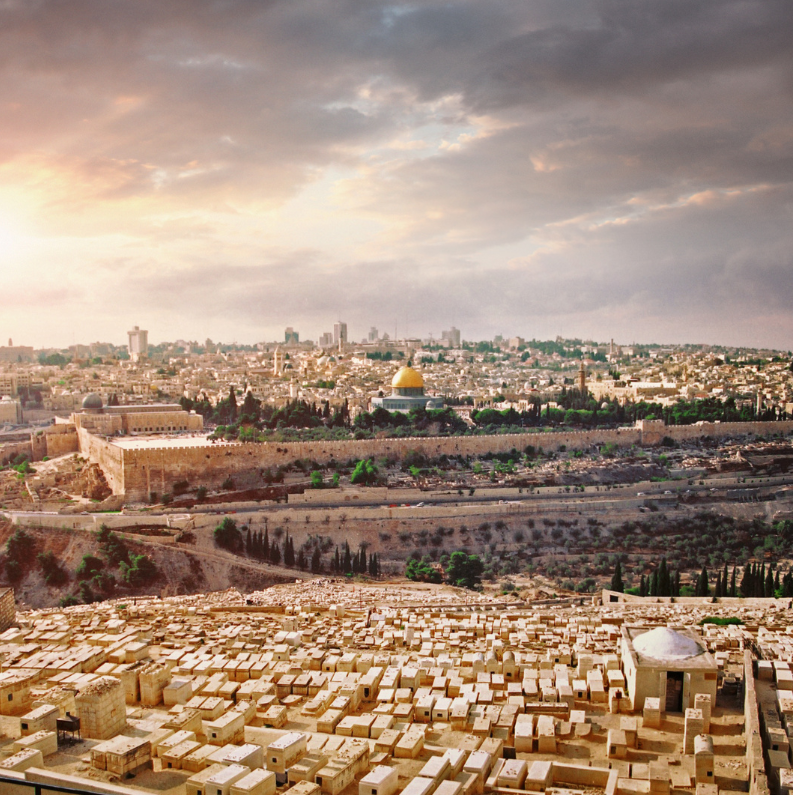
But rather than leading the crowds up to the Roman garrison at the Atonia Fortress to overthrow the Romans, Jesus led them up onto the Temple Mount, where He overturned the tables of the money changers and spoke out against the corruption of Israel’s religious elites.

The salvation that Jesus came to bring was not the salvation they had been hoping for. Truly, it was something better, but many of them were not able to see that yet. Similarly, there are times in our lives when God does not do what we expect or perhaps hoped He would. True worship in these cases involves walking with God by faith: trusting in His character, His promises, and His Word, and embracing His plan for your life, knowing that He knows what you truly need, and that He who did not spare even His own Son, but gave Him up for you, will surely work all things together for your good, since you are called according to His purpose (Romans 8:28, 32).

3. True Worship Involves Yielding to His Purifying Work

When Jesus arrived at the Temple, He did something that surprised those who were gathered there: He overturned tables, drove out the money changers, and said, “Is it not written, ‘My house shall be called a house of prayer for all the nations’? But you have made it a den of robbers” (Mark 11:17).

The religious leaders had turned the “courtyard of the Gentiles” into a marketplace. Here, Jesus is quoting two Old Testament passages. The first, Isaiah 56:7, describes the coming of the Gentiles to worship the Lord in the Temple. The second, Jeremiah 7:11, describes how people in Jeremiah’s time wrongly assumed that they could escape God’s judgment for their sins by hiding out in the Temple. Rather than reaching out to the world with God’s love and truth, the religious leaders of that time had turned the space meant for welcoming outsiders to come near to God into a place that lined their own pockets with revenue from the fees paid by merchants who sold goods. By cleansing the Temple, Jesus was asserting that He is the Lord over the Temple, and He was reclaiming it for its true purpose.

In the New Testament, we are told that we are now God’s temple, both corporately, as the church, and individually as believers in whom God’s Spirit dwells (1 Corinthians 6:19; 1 Peter 2:5). Just as Jesus cleansed the Temple back then, Jesus desires to cleanse and purify us as well, and claim us for the purpose He intends and desires for our lives and our churches to have.

Are there things in your life that Jesus desires to overturn and drive out—things that are not helpful, and need to go? Perhaps there are sinful attitudes or unhelpful practices that He wants to cleanse out of your life. Like the religious leaders, we can resist His purifying work. But when we yield to the cleansing He desires to do, we find greater joy, freedom, and increased effectiveness for His purposes in and through our lives.

How Will You Respond to Jesus this Palm Sunday?

The people of Jerusalem welcomed Jesus with praise—but when He didn’t meet their expectations, their worship faded into rejection.

How about you?

Will you honor Jesus as your King by giving Him the place of authority over your life?

Will you receive His salvation by putting your faith and trust in Him today? Will you yield to His purifying work, allowing Him to cleanse you from anything that is holding you back from living out the fullness of His purpose for you?

True worship is about surrendering every area of our lives to Jesus, trusting that His kingdom, His salvation, and His cleansing work are what we need most.

A Timeline of Holy Week: What Happened Between Palm Sunday and Jesus’ Resurrection?

Jesus’ last week in Jerusalem, known as Holy Week and Passion Week (from the Latin passio = to endure suffering), is the most significant and well-documented period of Jesus’ life. The Gospels all spend more time talking about this one week of Jesus’ life, along with the build up to it, than any other period in Jesus’ life or ministry.

Here is a timeline of the events which took place during this week:

Palm Sunday – The Triumphal Entry

The week begins with Jesus’ triumphal entry into Jerusalem on a donkey, fulfilling the prophecy of Zechariah 9:9. The people of Jerusalem lay down their cloaks and palm branches as a sign of honor and welcome. Jesus enters the city to the cheers and acclamations of the people, who cry out, “Hosanna! Blessed is he who comes in the name of the Lord!” (Matthew 21:9).

Monday – Cleansing the Temple

On Monday, Jesus returns to the temple and cleanses it of the merchants and moneychangers who had set up shop there. He teaches in the temple, and the religious leaders challenge his authority. Jesus responds with a series of parables, including the Parable of the Tenants and the Parable of the Wedding Banquet.

Tuesday – The Olivet Discourse

On Tuesday, Jesus continues to teach in the temple, and his opponents attempt to trap him with questions about paying taxes and the resurrection. Jesus responds with his famous declaration, “Render unto Caesar the things that are Caesar’s, and unto God the things that are God’s” (Mark 12:17). He also delivers his Olivet Discourse (Matthew 24-25), in which he prophesies about the destruction of the temple and the signs of his coming and of the end of the age.

Spy Wednesday

Wednesday is traditionally known as “Spy Wednesday” because it is believed to be the day on which Judas Iscariot agrees to betray Jesus to the authorities. This event is not recorded in the Gospels, but it is mentioned in Matthew 26:14-16, Mark 14:10-11, and Luke 22:3-6.

Maundy Thursday

On Thursday evening, Jesus shares a Passover meal with his disciples in the Upper Room. During this meal, he institutes the sacrament of the Eucharist and washes his disciples’ feet, giving them a powerful example of humility and service. After the meal, they go to the Garden of Gethsemane, where Jesus prays and his disciples fall asleep. Judas arrives with a crowd of soldiers and betrays Jesus with a kiss, leading to his arrest.

The word maundy comes from the Old French mande, in turn from the Latin mandātum, which means “mandate or command.” After washing the feet of his disciples during the Last Supper, John 13:34 tells us that Jesus told his disciples: “A new commandment (mandate) I give you, that you love one another; even as I have loved you, that you also love one another.”

Good Friday

On Friday, Jesus is brought before the High Priest and the Sanhedrin. They accuse him of blasphemy and condemn him to death. He is then taken to Pontius Pilate, the Roman governor of Judea, who finds no fault in him but is pressured by the crowd to have him crucified. Jesus is beaten, mocked, and forced to carry his own cross to a hill outside the city walls called Golgotha, where he is crucified alongside two criminals. He dies in the afternoon and is buried in a nearby tomb.

Holy Saturday

On Saturday, Jesus’ body lies in the tomb, and his followers observe the Sabbath in mourning and prayer.

Resurrection Sunday

On Sunday morning, several women go to Jesus’ tomb to anoint his body with spices. They discover that the tomb is empty, and they encounter angels who tell them that Jesus has risen from the dead. Jesus appears to his disciples throughout the day, including to the women at the tomb, to two disciples on the road to Emmaus, and to the disciples gathered in a locked room. He commissions them to go and make disciples of all nations, and he ascends into Heaven forty days later.

A Possible Alternative Timeline

Along with this traditionally held timeline, is a popular and plausible view which sees some of the events of Monday-Wednesday being combined, and has Jesus actually being crucified on Thursday rather than Friday, since John’s Gospel tells us that it took place on a “special Sabbath.”

For more on that timeline, check out: Was Jesus in the Grave Three Days and Three Nights? Here’s How It Adds Up

Palm Sunday Points Us to the Heart of the Gospel

Originally posted on CalvaryChapel.com

On our wedding day, as my wife was walking down the aisle, she looked at me intently, and the big question in her mind was, “Is he going to do it?” Her friend’s husband had done it at their wedding, and she wondered if I would too. But much to her dismay, I did not cry when she walked down the aisle. She asked me later on why I had not cried. “Why would I?”, I asked. “That was a moment to celebrate, not to cry!”

And yet, the Gospel of Luke tells us, that on Palm Sunday, when everyone else was celebrating and rejoicing, Jesus was crying. Why? The answer draws us into the heart of the gospel.

GOD’S PROMISE OF A TRUE KING

Israel had many kings throughout their history, but, as we see in the books of 1-2 Kings, each one was a disappointment. Some were better than others, but none of them fulfilled their potential, and all left the people hoping for more. 

God had promised that one day, He would send them a true king, who would rule in righteousness. He would be a liberator, who would set the people free from all oppression and establish a kingdom of peace and justice, which would have no end. And yet, no governing administration ever produced what they hoped it would. 

JESUS, THE TRUE KING & PROMISED MESSIAH

Rumors had been swirling for years that Jesus was the promised Messiah, the true king, but Jesus had refused to allow people to revere him as such, until Palm Sunday. On Palm Sunday, with the city of Jerusalem full of people who had come to celebrate Passover, Jesus affirmed publicly that he was indeed the Messiah, and he rode into the city on a donkey, fulfilling the prophecy of Zechariah 9:9.

The people waved palm branches (John 12:13), laying them on the ground, along with their cloaks, before Jesus to create a “red carpet” for the rightful king. The significance of this act is found in 2 Kings 9:13, when Jehu became king of Israel, overthrowing the wicked dynasty of the Ahab and Jezebel. At that time, the people laid their cloaks on the ground before him. Additionally, some 200 years before Jesus was born, in the Maccabean Revolt, Israel had successfully cast off their Syrian overlords and gained their independence — at which time, the people celebrated with a parade, in which they waved palm branches. The palm branch, stamped on Jewish coins, was a symbol of deliverance from oppression.

JESUS GOES TO THE TEMPLE, FAILING TO MEET THEIR EXPECTATIONS

And yet, upon entering Jerusalem, instead of going to the Antonia Fortress to put the Romans on notice, Jesus went to the Temple, where he drove out the money changers and healed the sick (Matthew 21:12-14). Clearly, many of the people were disappointed that Jesus did not give them a political solution that day. Perhaps some of the same people who shouted, “Hosanna,” on Palm Sunday were even amongst the crowd shouting, “Crucify Him,” on Good Friday, having been disillusioned that Jesus hadn’t done what they expected him to do.

Perhaps they should have read Zechariah’s prophecy again. “Behold, your king is coming to you; righteous and having salvation is he” (Zechariah 9:9). Jesus, the true king, came to meet our greatest need. The unrighteous, the Bible says, will not enter the Kingdom of God (1 Corinthians 6:9-10). Jesus, the only truly righteous person who has ever lived, came to meet our greatest need: so that through his life, death, and resurrection, we might be justified by his grace, and thereby be saved from judgment!

GOD’S PLAN: BETTER THAN WHAT THEY HOPED FOR

The people in Jerusalem had an expectation of what Jesus was going to do for them, but when Jesus didn’t do what they expected He would, some of them turned away — and yet, what Jesus was doing for them was better than what they had hoped for, and was what they truly needed! 

May that be a lesson for us this Palm Sunday, so that we would walk with God by faith, trusting in His character, His love, and His plans. Rather than a genie in a bottle, who always gives us what we want, we have a Father in Heaven, who loves us and gives us what we need — and that is infinitely better!

Jesus Wept With Us So That One Day We Might Rejoice With Him Forever

In Luke 19:41, we read that as Jesus was riding into Jerusalem on Palm Sunday, as the crowds were cheering, Jesus was crying. 

Shouldn’t He have been reveling in receiving the recognition that He rightly deserved? The reason Jesus cried is because, as He looked over Jerusalem, He knew that the current enthusiasm would not last, and He would soon be crucified as a criminal by the people He had come to save.

Yet, with tears streaming down His face, Jesus continued into Jerusalem. Why? Because, Hebrews 12:2 tells us of the joy that was set before him. 

Jesus wept with us for a moment, so that one day, we might rejoice with Him forever.

In the Book of Revelation, we are given this preview of Heaven: “After this I looked, and behold, a great multitude that no one could number, from every nation, from all tribes and peoples and languages, standing before the throne and before the Lamb, clothed in white robes, with “palm branches” in their hands, and crying out with a loud voice, “Salvation belongs to our God who sits on the throne, and to the Lamb!” (Revelation 7:9-10).

PALM BRANCHES – THE SYMBOL OF DELIVERANCE, AGAIN

In Heaven, we see palm branches, the symbol of deliverance from oppression, because Jesus, the true king, has liberated us from that which is at the root of all oppression! Whereas on Palm Sunday, people shouted “Hosanna!” (“Save Now”), the great multitude in Heaven declares that Jesus has saved them.

Palm Sunday points us to the heart of the gospel: The true King came to meet our greatest need, and He wept with us so that one day we might rejoice with Him forever.