
Dynel Lane, the Media and a Contradiction of Terms

20160219_091150_dynel

Almost a year ago, a tragedy happened here in Longmont: a pregnant woman responded to a Craigslist ad for free baby clothes, only to be attacked and to have her baby cut from her womb and abducted.

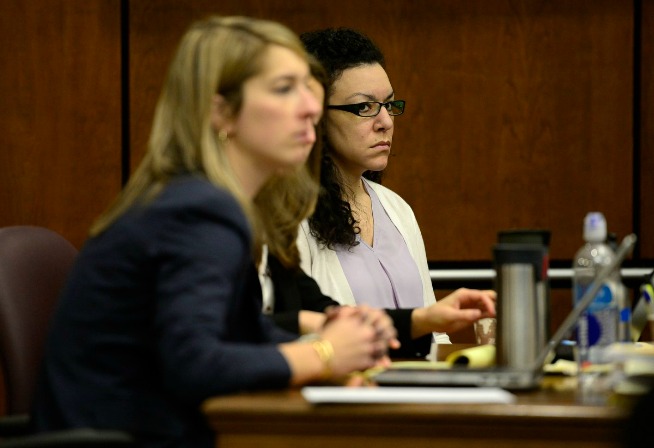
The baby did not survive, and the assailant, Dynel Lane is currently on trial this week in the Boulder District Court, however she is not being charged with murder, but with suspicion of attempted first-degree murder, first-degree assault and child abuse knowingly and recklessly resulting in death and unlawful termination of a pregnancy.

Colorado law does not count the death of an unborn child as murder, only if the child lived outside of the womb for some time. The issue in this case is that it’s not possible to prove how long the child lived outside of the womb – so Colorado’s wording of the law will not allow a murder charge in this case, even though wrongful death is obvious.

Dynel Lane has pleaded not guilty to these charges and has come back saying that it was Michelle Wilkins who attacked and tried to stab her, and that she was only trying to defend herself, and the reason she cut the baby out of Michelle’s womb was because she thought Michelle was dead and was trying to save the baby. This however, gives no explanation for why Dynel Lane told medical personal at Longmont United Hospital that the baby was hers, until they realized that she hadn’t given birth and the baby couldn’t be hers.

You can read Dynel Lane’s testimony here.

Today closing arguments are being presented by both sides.

This case presents a conundrum, not only for the wording of the law, but for the media in telling the story.  As one friend pointed out: The Denver Post reported that Dynel Lane “…cut out Wilkins’ fetus before taking the baby to Longmont United Hospital…”

Did you catch that?  She cut out a “fetus” and then took the “baby” to Longmont United Hospital.

It’s a very careful choosing of words which reflects a fundamental belief: that unborn children are not actually children.

The word they’ve coined to help create this false dichotomy – which this case so painfully exposes – is “fetus.” What’s ironic, is that this is based on a failure to grasp the fact that the word fetus is simply Latin for “young person.”

Fetus is Latin for “young person”

Did you catch that?  Young PERSON.    Not “young mass of tissue, akin more to cancer than to a human being.”

This case presents a conundrum for lawmakers and the media, because it shows that a fetus and a baby are not two separate things. Everyone knows that what this woman did was wrong, because she killed a baby… But if we stick with strictly considering the unborn unhuman, then why is this crime so heinous?

Is a baby only a baby if its mother wants it?   Clearly the answer is no.

I will be interested to see what happens in this case. Hoping for justice for Dynel Lane’s crime and mercy for her soul.


Longmont Baby Abductor Will Not Be Charged With Murder

I was talking to a friend in Romania the other day and he said it feels like he is always seeing Longmont in the news.

It’s true. Longmont has made national (and apparently international) headlines a lot in the past few years, and not for good reasons: catastrophic floods, carjackings involving kids, and most recently a fetal abduction in which a woman who was 7 months pregnant responded to a Craigslist ad for free baby clothes was beaten, stabbed and had her baby cut from her womb and kidnapped.

For what it’s worth – crime rates in Longmont have actually decreased in the last year, as opposed to Boulder, which has higher crime rates which haven’t decreased, but this kind of stuff, although not characteristic of this fine town, gets a lot of publicity – as it should.

The suspect’s arraignment will be today at 1:30, but the Times-Call reported that the DA has already stated that murder will not be among the charges brought against this woman, the reason being that Colorado law does not count the death of an unborn child as murder, unless the child lived outside of the womb for some time. The issue in this case is that it’s not possible to prove that the child lived outside of the womb, and if so, for how long – so Colorado’s wording of the law will not allow a murder charge in this case.

People in Longmont were protesting this and picketing on Main Street last week when it was first announced. The charges expected to be brought against the suspect are: suspicion of attempted first-degree murder, first-degree assault and child abuse knowingly and recklessly resulting in death.

The problem with those charges are that even all together they will not lead to as strong of a sentence as if murder or manslaughter had been part of it. Since the mother survived, and there is no proof that the baby lived outside of the womb, Colorado law has no way to charge her with anything stronger.

What do you think?  Is this justice?

The sad part of this is that if this attack had not happened, this baby would have lived. The baby’s life was clearly taken by this attack. I find it hard to accept that we have no way to prosecute that.

Marijuana Legalization and the Effect on Kids

One of my most popular posts on this blog so far was one I wrote about marijuana legalization and Christianity.

In that post, I mentioned that one of the greatest concerns I have with legalizing marijuana is NOT that I want to legislate Christian moral values on people who aren’t Christians (read more about that issue here) – but that it will make it more accessible to children, something that no one on either side of the discussion wants.

It seems that my concern is legitimate, and that this is already happening. The Denver Post published an article this week titled: “Pot problems in Colorado schools increase with legalization”. Here are some quotes from that article:

  • [Mike] Dillon… a school resource officer with the Mesa County Sheriff’s Department, said he is seeing more and younger kids bringing marijuana to schools, in sometimes-surprising quantities.
  • school officials believe the jump is linked to the message that legalization (even though it is still prohibited for anyone under 21) is sending to kids: that marijuana is a medicine and a safe and accepted recreational activity. It is also believed to be more available.
  • “Kids are smoking before school and during lunch breaks. They come into school reeking of pot,” “They are being much more brazen.”
  • when school officials were asked to identify the reason for students’ expulsions. Marijuana came in first. It was listed as being a reason for 32 percent of expulsions.
  • National statistics also point to marijuana being more prevalent in schools. The National Institute of Drug Abuse found that marijuana use has climbed among 10th- and 12th-graders nationally, while the use of other drugs and alcohol has held steady or declined.
  • “They need to know how destructive it is to the adolescent brain,”

I remember when I was in high school, kids brought pot to school and smoked it at school. I certainly don’t want my kids doing it though, and it seems to me that legalization will only make it more accessible – the facts show that is already happening.

What do you think? Is this something we should be concerned about?

Longmont Church Officials Face Charges In Assault Case

What happened at VineLife is grievous, and the worst kind of offense. In a place where people, especially youth, should be safe, an offense like this is especially terrible.
What makes it worse in this case is that pastors and elders were involved in covering up the situation and not reporting it to police.
There is biblical precedent for dealing with things internally rather than going to court, but I believe this regards civil disputes rather than crimes, especially felonies.
The other thing this story brings to awareness for pastors and church leaders is the fact that pastors, like teachers, are mandatory reporters. A friend of mine who works at a school was recently held responsible before the law because he heard a rumor, investigated it himself, was convinced that nothing had happened – yet did not report it to police. That’s against the law. Pastors in America need to keep that in mind – and we must never cover up crimes. This all falls under the category of respecting the authorities that God has placed over us and the laws of the land in which we live (Romans 13).

Marijuana Legalization and Christianity

This week a Gallup poll came out which showed that for the first time, a majority of Americans favor legalizing marijuana. In fact, in the past year, the support for marijuana legalization surged from 48% to 58% of those polled. Here in Colorado, we live in a state that has had medical marijuana legal for years and which voted last November to legalize its recreational use as well. Not to mention that here in Boulder County, whether it’s legal or not, people in this area have been smoking a lot of pot for a long time and will continue to do so. A friend of mine who just moved to BoCo wrote this about how prevalent marijuana use is just in his daily commute. Just the other day I was talking to someone about Lyons High School (thinking ahead for our kids); they said it’s a good school – but that it’s known for the kids there smoking a ton of weed.

Marijuana is here to stay. It’s already been legalized in this state, and will soon be regulated. Interestingly enough though, I have heard almost NOTHING from Christian leaders on this topic. I have, however, heard a lot of people talking about it – including Christians, saying things like: If marijuana becomes legal and readily available in the same way that alcohol is, then is there anything wrong with trying it out? If you can buy it in a shop and it becomes socially acceptable, then is there any reason to not occasionally indulge?

Up until now, pastors have been telling people they shouldn’t smoke pot because it’s illegal, and the Bible instructs us to honor the laws of the land we live in (Romans 13). But now – guess what: game changer! Marijuana is no longer illegal! Drinking alcohol in moderation is more or less acceptable in most Christian circles these days – so if marijuana gets put in the same legal category, then is it okay to treat it the same way?

These are real questions that people – including Christians – are considering. If Christian leaders aren’t talking about what people are actually thinking about and talking about, then we have become irrelevant and are not engaging people and bringing God’s word to bear on the time and place we live in, as we are called to do.

So, what should be the Christian response to the legalization of marijuana?

What does the Bible say?

The Bible doesn’t say anything about marijuana – just like it doesn’t say anything about tobacco or chemical weapons or genetically modified food. But there are principles the Bible lays down which apply.

The “don’t do it because it’s illegal” argument is soon to be off the table, so what should our position be towards recreational marijuana use? The Bible doesn’t say anything about marijuana in particular, but it does speak about mind-altering drugs – in Greek: farmakeia – which were used recreationally rather than medicinally.

Also, the Bible tells us not to be drunk, but to be filled with the Holy Spirit – i.e.: Don’t be under the influence of substances, but be under the influence of God’s Spirit.

The differences between marijuana and alcohol

More and more people are speaking up about how much safer marijuana is than alcohol. You never hear about people committing violent acts because they are stoned. Marijuana has also not been shown to cause long-term brain damage as alcohol has.

But the difference between marijuana and alcohol are that you can drink alcohol without getting intoxicated. It’s possible to drink wine (like Jesus did) or beer with a meal to enjoy the flavor without getting drunk. No one smokes marijuana just for the flavor – the very point of smoking it is mood alteration.

Will marijuana legalization change anything?

It’s clear by now that adults are going to smoke marijuana whether it is legal or not – which is why more and more people are saying, ‘why not tax it and regulate it then?’. It has been estimated that up to $40 million dollars in tax revenue could come in from recreational marijuana sales in Colorado, which would be earmarked for schools. Regulating marijuana, they point out, could also kill at least part of the black market for it, which inevitably leads to violent crime.

Certainly marijuana use would increase once it’s legalized – as people who were once worried about doing something illegal would no longer have to worry about that. Also, and this is a concern for me – it would make it more accessible to kids, because they would no longer need to find a dealer, they will just have to find a friend with an older brother who is willing to buy it for them – just like with alcohol and tobacco.

I smoked pot when I was a teenager, before I gave my life to the Lord when I was 16. I have family members who smoke pot regularly, and I don’t want my kids to smoke pot. I don’t want them to check out or get intoxicated to cope with life or to have fun – whether with alcohol or marijuana or any other substance.

Legislating morality and the real issue

There are plenty of things the Bible instructs us not to do that are legal in our society, such as adultery, fornication, drunkenness, sorcery, etc. Christian maturity means being able to discern and choose for yourself, from a heart-felt response to God’s grace rather than needing to have someone hold your hand and dictate to you what to do.

There are plenty of ways to harm yourself which are completely legal. You can go buy some glue and sniff it and get high – legally. There are also ways to harm yourself, however, which are illegal, such as chemical food additives, cocaine, certain medications, meth, etc. which we consider detrimental to society and harmful to people, which we have banned and we don’t give people legal avenues to indulge in.

For us as Christians, the point is clear: marijuana is intoxicating. We should not be intoxicated or controlled by substances, but by the Holy Spirit. It’s pretty cut and dry.

For society in general, it’s a question of whether or not it would be helpful or harmful to have more intoxicated people everywhere and to make a mind-altering drug more accessible to children than it already is.