COVID-19, social unrest, natural disasters… A lot of people have been asking what these current events mean in light of Bible prophecy.
Does the Bible speak about these events – and if so, what does it say?
Furthermore, if the return of Jesus is imminent, what does it mean for us to be “ready” for His return?
Some people believe that to be ready means to stockpile food and guns – you know, so you can shoot your neighbors when they get hungry and try to take your food, right?! I’m quite sure that’s not what Jesus wants us to do, and it’s not what it means to be ready for his return.
So, what does it mean for us to be “ready” for Jesus’ return? If we are living in the last days, what should we be doing?
Mike and I sat down to discuss these questions in our latest video. Check it out:
Doctors tell us that children in the womb are able to recognize their mother’s voice and differentiate it from the voices of others. Even though they’ve never seen their mother, they know and respond to her voice.
How are babies able to differentiate their mother’s voice from other voices they hear? Because their mother’s voice is the voice they hear and listen to most often.
What voices are you listening to the most?
Right now, more than ever before, there are a lot of voices out there vying for your attention. It used to be that everybody had an opinion, but now everyone has a platform.
Mobile devices are designed not primarily for creating content, but consuming it.
If you don’t think that you are being shaped by the content you consume, think again. So choose wisely!
You can spend your time listening to the voices of political pundits, reading all kinds of articles, you can spend your time listening to the voices of everyone on social media…
The content you consume not only conveys information, it has a teleology, in other words: it aims to lead you somewhere. To use a biblical term: they seek to make you disciples of their beliefs and attitudes.
Just like a baby in its mother’s womb: whose voice do you want to be most familiar with? Whose voice do you want filling your ears and shaping your thoughts the most?
Many people today are being discipled more by social media, politicians, and influencers than by Moses, Isaiah, Paul, and Jesus.
May I encourage you instead to spend more time listening to the voice of God than to all those other voices?
As you immerse yourself in the Word of God, it tunes your heart to God’s voice and it familiarizes you with his voice. As you read and study the Bible, you get to know God’s voice and God’s heart, and you become familiar with the kinds of things God says.
Jesus described himself as the Good Shepherd, and he said that his sheep know his voice and will not follow the voice of another. (John 10:4-5)
When it comes to hearing God’s voice: the most reliable, most certain way to hear God’s voice is to immerse yourself in the words of Scripture.
Let me encourage you to make His voice the voice you listen to the most. He alone has the words of eternal life, and everything that pertains to life and godliness.
Here is a recent message I taught at White Fields Church on the topic of hearing God’s voice:
Men, join me September 11-12, 2020 in Cheyenne, Wyoming for a men’s conference. I will be teaching two messages from the life of Gideon in the Book of Judges.
Details about the conference are in the image below:
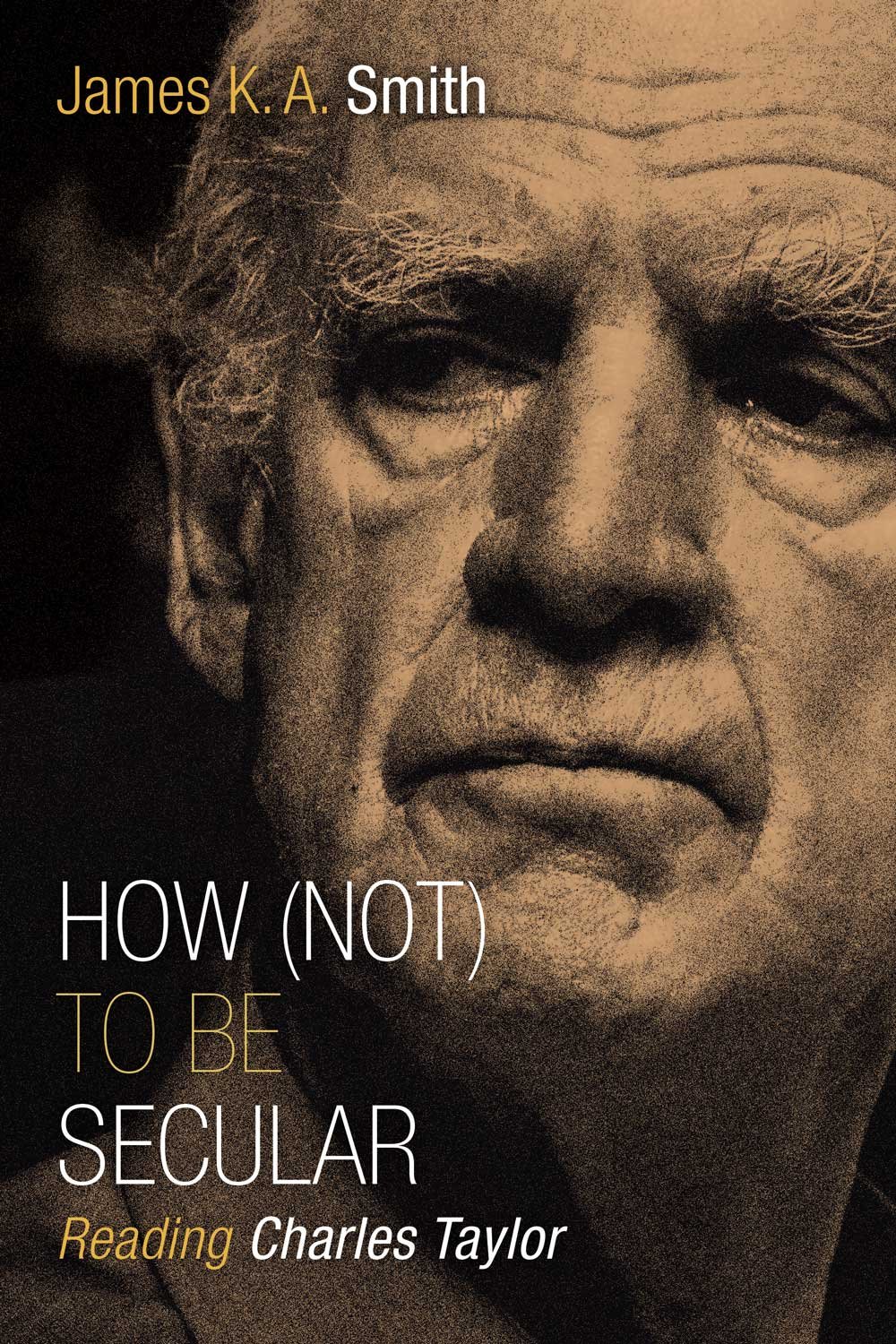
Looking for some light reading? How about an audio book for your next leisurely drive? This might not be it. If you’re looking for a short but extremely thoughtful book with intensely helpful cultural insights, then here you go:
Smith’s purpose in writing a book about a book is that A Secular Age is both intimidating in its size and is written in a way which is inaccessible to many readers who would benefit from its content. I for one, though I am intrigued by Taylor’s book and its analysis of modern secular culture, balked at the 900+ page tome.
The Imminent Frame: Haunted by Transcendence
Smith’s book introduces you to Taylor’s key concepts and arguments, as well as some of his key terms, such as his analysis of the secular mindset as the “imminent frame.” This reminded me of a conversation I had with a relative years ago, who is my same age (an older millennial); when we started talking about the existence of God, she said, “Maybe God does exist, but: who cares?”
The imminent frame is only concerned with what is right in front of them, “the here and now”, and yet, Taylor explains that exclusive humanists who inhabit the imminent frame are “haunted by transcendence.” Smith points this out by quoting lyrics from The Postal Service:
And I’m looking through the glass Where the light bends at the cracks And I’m screaming at the top of my lungs Pretending the echoes belong to someone Someone I used to know
The Postal Service, “We Will Become Silhouettes”
Basically, no matter how much a person claims to not care whether God exists, or there is life after death, they are haunted by thoughts of it. I remember another family member describing how utterly terrified she was of dying, yet when I asked her what she believed about life after death, she said she doesn’t know, and assumes there is nothing. I don’t believe her: why be afraid of nothing? There is a nagging, haunting hunch in the heart and mind of every person, that there is something more than this life and this world… A God to whom they will answer, an existence beyond the grave.
Another aspect of the secular, exclusive humanism is the concept Taylor called “the buffered self”, which refers to the idea that an individual is an island unto themselves: that there is a firm boundary between the self and others, as opposed to the “porous self” which characterized people in previous eras.
Epistemic Pelagianism
James K.A. Smith’s book is not just a summary though, he also applies many of Taylor’s ideas to Christianity: both how Christianity contributed to and is influenced by this modern secular age.
I first listened to half of this book via audiobook on a drive to climb La Plata Peak, a Colorado 14-er. Later on, I picked up a hard copy to read as well, as there are some parts of the book which aren’t particularly well-suited for digesting properly listening at 1.5 speed while driving at dawn through the mountains.
One phrase Smith used, which my friend who was listening with me in the car ended up discussing for a while afterwards was: Epistemic Pelagianism. It’s the kind of phrase that forces you to hit the pause button and break it down in order to unpack what these two words together mean.
Epistemology = the theory of knowledge, especially with regard to its methods, validity, and scope. Epistemology is the investigation of what distinguishes justified belief from opinion. Epistemology deals with questions like, “How can we know that what we believe is really accurate or true? To what degree do we have the capacity to accurately discern truth and/or reality?”
Pelagianism = Pelagius (354 – 418 AD) was a theologian who denied the doctrine of original sin. He argued for the innate goodness of human beings and for absolute free will. Pelagius argued for these things in contrast to Augustine of Hippo, who taught from the Scriptures that human beings are fallen, and our fallen condition affects our will and nature.
“Epistemic Pelagianism” therefore refers to the idea that as human beings, we are capable of figuring everything out by ourselves, without any help from God.
Epistemic pelagianism denies the fact that we don’t see everything clearly. It denies the idea that, apart from God’s intervention in our lives, we are fallen, limited beings whose hearts are not pure. It places far to much confidence, to the point of hubris, in our ability to accurately discern and interpret the data we take in, in a way that can lead us to all truth, apart from any intervention or help from God.
Rather than epistemic pelagianism, the Bible teaches us that without God’s help, we cannot see clearly, and are incapable of objectively assessing and interpreting things. We need God to remove the blinders from our eyes, in order for us to see clearly.
This biblical epistemology leads us to humility rather than hubris; it leads us to the conclusion that we can’t see or know everything, that we can be wrong.
The Bible teaches that we only see in part, as in a mirror dimly (1 Corinthians 13:12), that a natural person is incapable of comprehending all truth apart (1 Corinthians 1:14), that our hearts are fundamentally broken and have a tendency to mislead us (Jeremiah 17:9), and therefore it is possible to hear and not understand, to see and not perceive (Acts 28:26).
There are things that we can know (Romans 1:19), but even in those cases we have a tendency to suppress that knowledge if we don’t like the conclusions it would lead to (Romans 1:18)
Thus, confidence in our ability, or willingness for that matter, to comprehend and follow the truth, apart from God’s intervention, is misguided. Instead, we need to take a more realistic and humble view of ourselves, which admits that we need outside assistance in order to receive, comprehend, and appropriately respond to the truth.
Conclusion
Ultimately, we see that theology shapes the way you view all of life. Modern exclusive secularism is based, at least in some part, on bad theology which is clearly refuted in the Bible. Good, robust, comprehensive Biblical theology therefore, is an antidote to many modern philosophical pitfalls.
If you’re looking for an accessible book that helps you understand Charles Taylor’s piercing insights into the exclusive humanism which is prevalent in many of today’s Western cities, as well as the cracks in those theories, and ways in which the gospel uniquely speaks to people today, check out James K.A. Smith’s book How (Not) to Be Secular, but make sure to take the time to break down and digest each sentence.
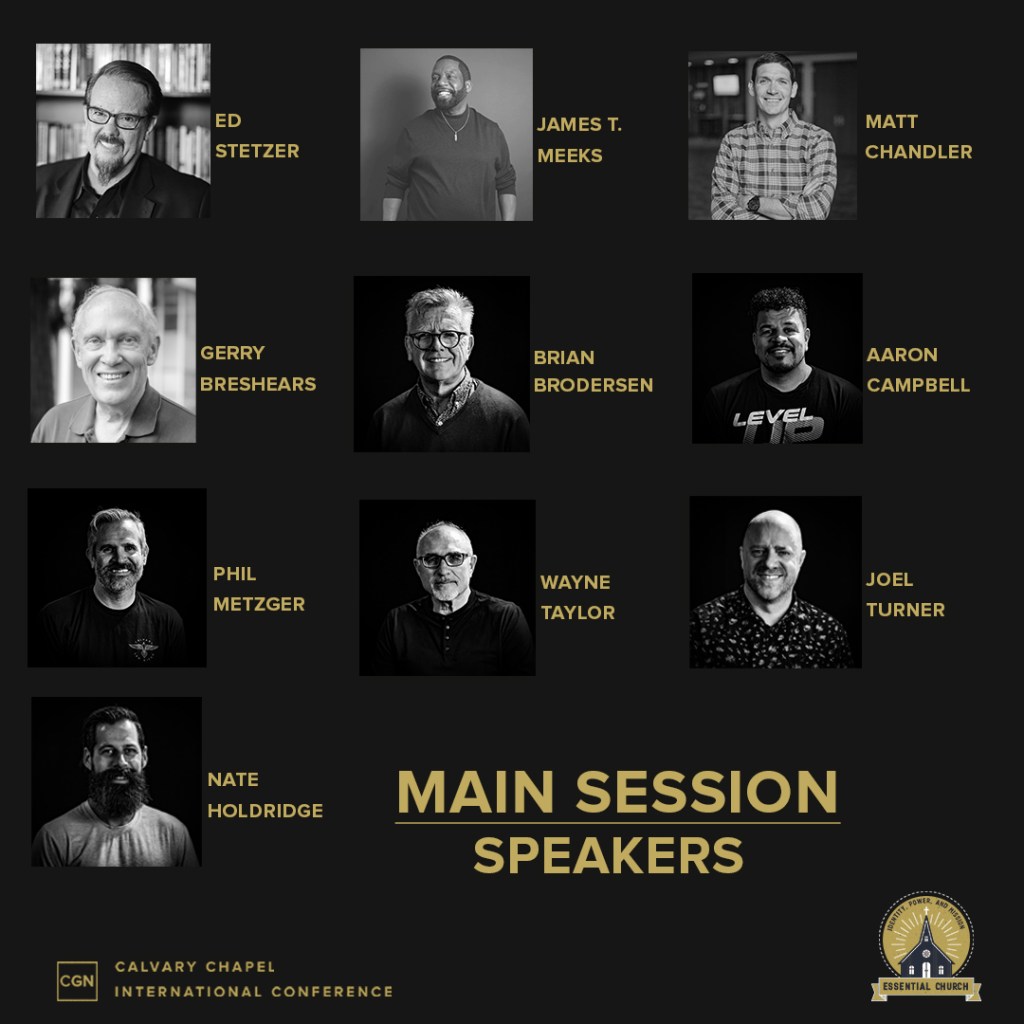
Every summer Calvary Chapel puts on a conference for pastors and ministry leaders in Southern California. This year the conference has been moved online because of COVID, but one of the benefits is that this opens up the opportunity for those who can’t easily take a week off and travel to California to be able to join and be encouraged.
This year’s conference will be August 10-13, 2020. The cost is $10, which gives you access to all of the bonus content, including a seminar I was part of with Expositors Collective on the topic of expository and Christ-centered preaching and teaching.
We are using a platform for the conference which allows a lot of interaction as well as multiple “rooms” you can join during the conference for different seminars on topics those in ministry will surely find helpful and interesting for the areas where you lead.



 Theology for the People