
Recently at White Fields Church, we have been studying through the Book of Nehemiah (check out the entire series here). This past Sunday, Pastor Jason taught Nehemiah 11-12, and in his message he mentioned, and showed a picture of the “bulla” (seal) of Hezekiah.
As I looked at this picture, I saw on it a familiar symbol: it looks like a cross, but it has an oval on the top.
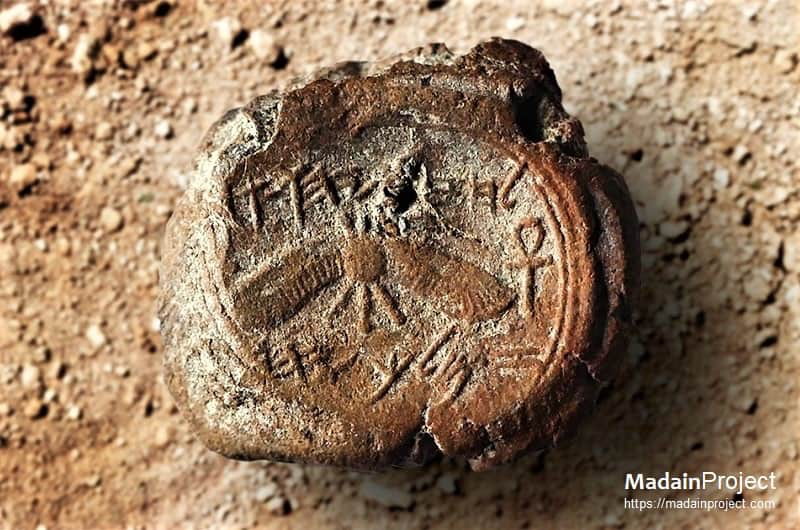
At first glance it might appear to be a version of a cross. However, King Hezekiah lived long before Jesus was born.
That symbol is not a cross, it is an ancient Egyptian hieroglyph called an “Ankh,” and it represents “life.”
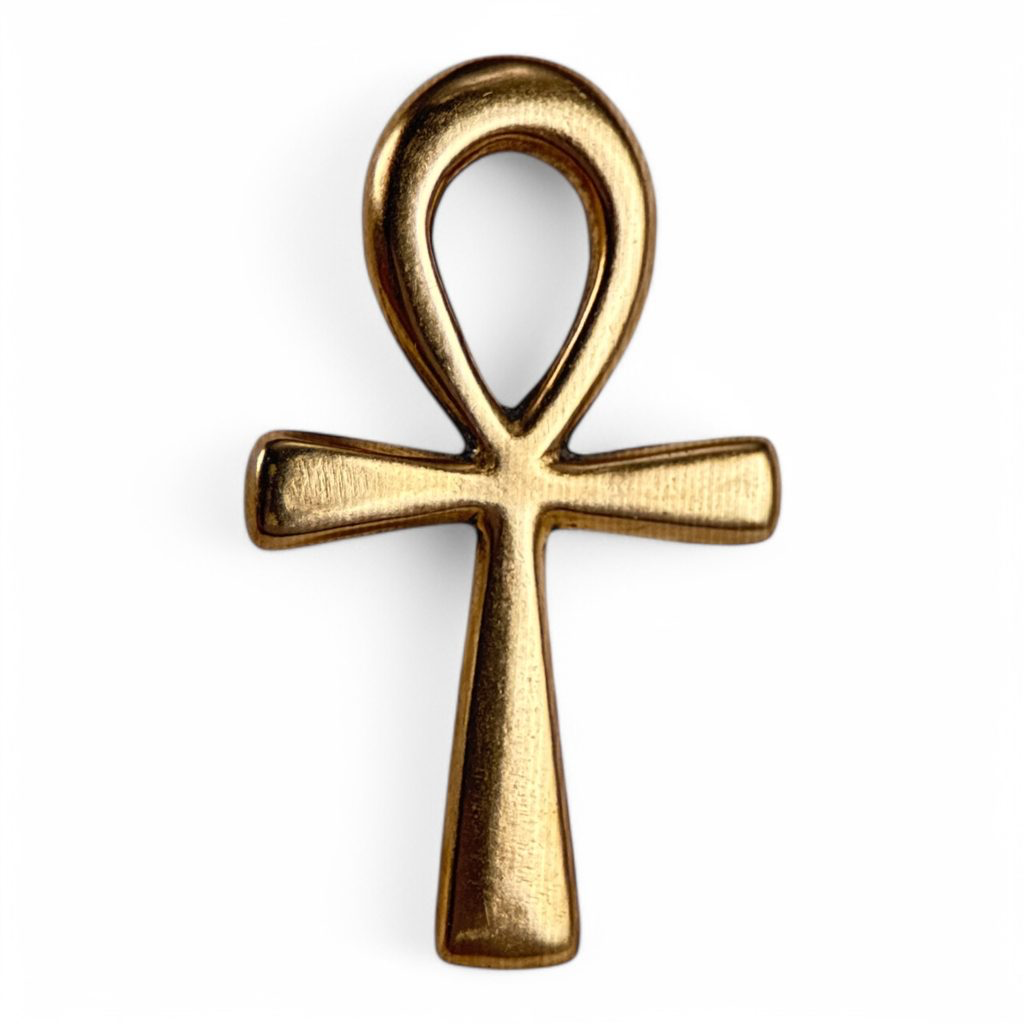
So, you might wonder (as I did): “What is an Egyptian symbol doing on Hezekiah’s seal?”
The Discovery of Hezekiah’s Seal
King Hezekiah’s royal seal, or bulla, was discovered in 2015 near the foot of the Temple Mount in Jerusalem. It bears the inscription, “Belonging to Hezekiah [son of] Ahaz king of Judah,” and features a two-winged sun disk, flanked by an ankh. It is just one more in the long line of archaeological evidence which verifies the historicity of the biblical account.
Hezekiah (2 Kings 18-20, 2 Chronicles 29-32) reigned from about 715–686 BC, and he was one of Judah’s most righteous kings. He is praised for his unwavering devotion to the God of Israel and his radical reforms. He famously tore down the high places, smashed sacred stones, and cut down Asherah poles, all of which were associated with idolatrous worship that had become ingrained in Jewish society. He broke into pieces the bronze snake called “Nehushtan,” which Moses had made, because the people had started worshiping it (2 Kings 18:4).
In light of this, it seems confusing and even perplexing to see an Egyptian symbol, from a pagan culture, on King Hezekiah’s royal seal. How could a king so committed to removing pagan idolatry use an Egyptian emblem to identify himself?
The Ankh: The Egyptian Symbol of Life
The Ankh is one of the most recognizable symbols from ancient Egypt. It is a hieroglyph that translates to “life” and it served as a representation of both physical life on Earth and eternal life in the afterlife.
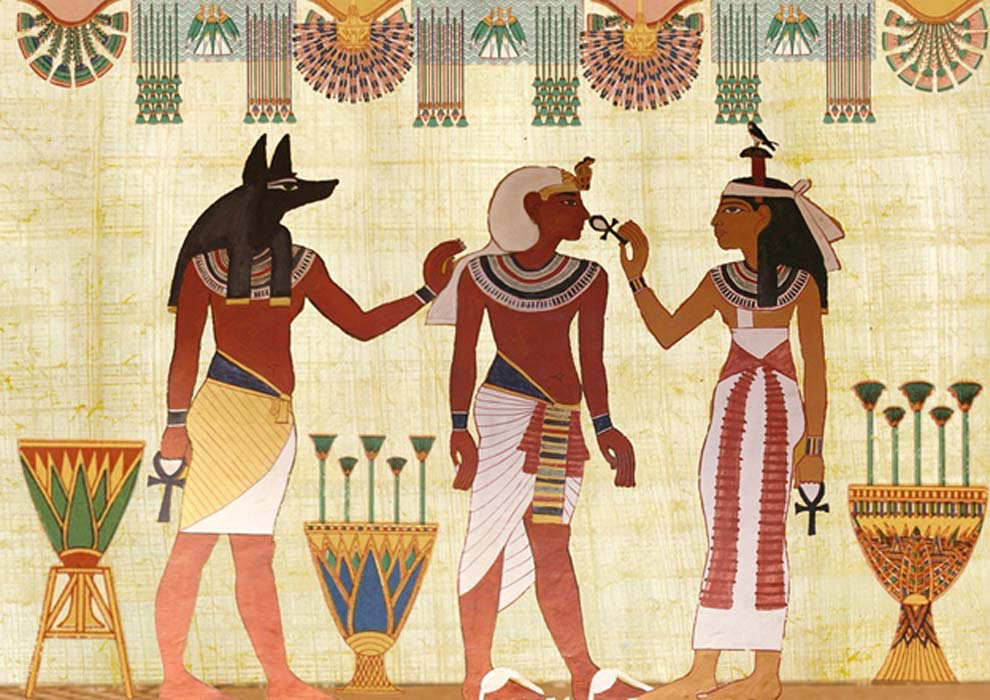
In Egyptian art, gods and goddesses, like Isis, Osiris, and Ra, were frequently depicted holding the ankh, often offering it to pharaohs as a “breath of life” or a bestowal of divine vitality and immortality. It was carved into temple walls, etched onto sarcophagi, and fashioned into amulets worn for protection and longevity.
Why Is There an Ankh on Hezekiah’s Seal?
We can’t be completely sure why Hezekiah chose to use this symbol on his royal seal, but there are three possible explanations:
1. Maybe the Ankh had changed into a cross-cultural symbol by Hezekiah’s time
By the 8th century BC, when Hezekiah was alive, some scholars say that the ankh had transcended its Egyptian religious context and become a more generalized, “loan-word” symbol for “life” or “good fortune” across the ancient Near East.
There are several examples we can think of today for reference, such as the “heart” symbol, used as a symbol for love. Furthermore, the swastika is an example of a symbol which had its origin in Hinduism, but now is seen as symbolizing the Nazi party and white supremacy. The Star of David is now universally acknowledged as representing the Jewish nation, but prior to its use in that way, it was used as a symbol in Buddhism. [1]
So, the meaning of symbols can change over time, and perhaps by the time of Hezekiah, the ankh may have become a secularized shorthand universally understood to represent vitality, prosperity, and longevity. On Hezekiah’s seal, this might have simply meant something like: “Long live the King.”
2. Maybe It Symbolized Hezekiah’s Miraculous Recovery
One theory suggests that the specific design on Hezekiah’s seal represents the pivotal event that took place towards the end of his life, when he fell mortally ill, but was then healed by God.
It is thought that perhaps the downturned wings of the sun disk and the ankh represent his fatal illness, and then his divine healing and the prolonging of his life. This seal, in that case, would have been used at the end of Hezekiah’s life, after his healing took place.
The story of Hezekiah’s illness and subsequent healing are found in 2 Kings 20 and Isaiah 38. After falling deathly ill, Hezekiah was told by the prophet Isaiah to set his house in order, because he was going to die. Hezekiah prayed, and God heard his plea, and gave him another 15 years of life. Sadly, those extra years were marked by lapses in judgment; during this time, he fathered Manasseh, who would grow up to be the most wicked king in Judah’s history, undoing nearly every godly reform his father had established. Also, when a Babylonian envoy visited, Hezekiah showed them all the all the treasures of the Temple and his kingdom, which led to a prophecy from Isaiah that all those riches, along with Hezekiah’s descendants, would one day be carried off into captivity in Babylon.
Some scholars believe that the two-winged sun disk is a symbol of divine protection, and may have been interpreted as a symbol of “the ‘Sun of Righteousness’ as in Malachi 4:2, which says “But for you who fear my name, the sun of righteousness shall rise with healing in its wings.”
If this is the case, then the ankh would be a symbol of life, as in: a memorial or statement that Hezekiah’s life was prolonged by God’s healing grace.
3. Maybe It Was an Attempt at Political Diplomacy
Other scholars suggest that since the Kingdom of Judah was a small state caught between the mighty empires of Assyria to the north and Egypt to the south, Hezekiah used the ankh symbol as a way to “fit in” on the world stage, or perhaps as a symbol of his alliance with Egypt – and being against Assyria.
Alas, one final option, related to this, is that perhaps Hezekiah’s use of this symbol was indeed a form of religious syncretism, either in a desire to win the favor of the Egyptians, or because he himself had begun to let pagan symbols, practices, or even beliefs creep into his heart.
Conclusion
The truth is, we don’t really know why the ankh was featured on Hezekiah’s seal, but considering the possible reasons for it leads you on a journey through the life of a man who was used greatly by God in his younger years, and who experienced incredible grace in the form of miraculous healing, but whose life ended tragically in unwise decisions that lacked faith in God.
Hezekiah could have heeded the words of the Prophet Isaiah warning him not to do those things and to repent. Hezekiah could have made continuing in and passing on the God-loving values of his younger years for the next generation. May God keep us from syncretism, and from the mistakes and failures of Hezekiah!
 Theology for the People